Godflesh – Post Self

Genre: Industrial| Label: Earache Records
Location: Birmingham, England | Listen: Bandcamp

godflesh post self

In 2009, seminal industrial metal act Godflesh reformed and started playing live shows again. It took five years before the band put out new material, and eager fans were rewarded with both an EP and LP in 2014. Although I quite enjoyed the “Decline & Fall” EP, I felt that “A World Lit Only By Fire” didn’t really break any new ground, but it did deliver a pretty straightforward Godflesh experience. A few years later, Godflesh released another album, and this time, they struck gold. “Post Self,” the band’s 8th full length, is one of their strongest albums, and it manages to do so with conviction.

The album’s title track opens up innocently enough. The classic Godflesh sound is intact, as it pounds ahead with a drum machine beat and a simple, yet heavy riff. The song, however, juxtaposes this against some more more relaxed, yet dissonant sounding sound scapes between the classic Godflesh sound. Although this might sound pretty jarring, and it is to a point, it doesn’t feel out of place. Broadrick and Green have a way of weaving around these parts that make it pretty cohesive. The old school sounding Godflesh sound is preserved pretty well, but not near as raw, as one would expect with the years of experience behind the band. “Parasite” and “No Body” both deliver some groovy hooks that will remind fans of albums like “Selfless.”

When this album dropped, there was talk about more experimental electronic parts making appearances on it, and I couldn’t help but anticipate that it’d be in the vein of “Us and Them.” While there are electronic elements showing up on this record, they do not sound like late 90’s EDM like that of the aforementioned record. Instead, we’re treated to a more modern sound, likened to a lot of the darkwave/synthwave that has made a comeback over the last decade. We see some hints of these more ethereal and laid back sounds with “Mirror of Finite Light,” which although still clearly driven by an industrial beat, it breaks up the more monolithic sounding parts earlier in the record. Meanwhile, tracks like “Be God” and the “Cyclic End” really push into more spaced out atmosphere, with the latter being very reminiscent of a Jesu song.

The album continues to be a little more on the ethereal side in the middle, but picks up again for the most part with more driving industrial beats for the last few songs. There’s definitely a more pronounced use of synthesizers than previous Godflesh releases, again lending itself to having more of a darkwave feel at times. The ebb and flow of this record is fantastic, and it doesn’t get too monotonous with the different directions it takes.

As far as I’m concerned, this is the best material that Godflesh has put out since reforming. It’s shorter than the previous album, making it less of a chore to digest, but more importantly, it manages to break some new ground for Godflesh without sounding forced. Broadrick has a brilliant mind when it comes to putting sounds together, and it’s amazing he’s still able to find fresh ways to express his signature industrial sound after all these years. Godflesh fans of old and new will certainly find plenty to be pleased with when it comes to “Post Self.”

85%

Incantation – XXV

Genre: Death Metal | Label: Independent
Location: Johnstown, PA | Listen: N/A

incantation xxv

Another day, another Incantation review. This time we’re going to talk about the “XXV” compilation, which was released in 2016 to celebrate the 25+ year existence of the band. Released exclusively on vinyl by the band themselves, this is very much a “for the fans” kind of release. In other words, if you’re not familiar with Incantation, this isn’t exactly the best way to become acquainted with them. For fans like me who can’t resist adding another Incantation release to the collection, “XXV” offers a new twist on some old classics, and is overall fairly enjoyable.

The first side of this LP contains four studio recordings. Of those, one is a brand new song, “Obelisk Reflection.” This song definitely sounds like more modern Incantation, but Incantation nonetheless. They wrote this one with Sonny Lombardozzi during the “Dirges of Elysium” sessions he was involved in, and he throws his stamp on it with some brief shredding. There’s some pretty finger twisting riffs with lots of trem picking, and to no surprised, they are balanced out with some hard hitting doom sections. The other three tracks are re-recordings of some old songs. “Nefarious Warriors” has only ever appeared as a live studio recording on the “Tribute to the Goat” CD, and it’s studio version really brings new life to it. It’s got a real gloomy section that sounds much more powerful than the older version. The other two songs are classic Incantation tunes, given a bit of a facelift with Incantation’s modern line-up and production values. McEntee’s vocals actually sound pretty demonic, and he does a commendable job impersonating Craig Pillard’s ungodly low growls.

I’m not sure why the band has opted for Dan Swano instead of recording at Mars Studio with Bill Korecky in recent years, as I much prefer the sound of their late 90’s and 2000’s production. If you’re familiar with their albums over the last decade, this sounds just like it, with everything being extremely loud and clear, almost too clinically. The heaviness of the songs can’t be denied though, so even these classic tracks can still stand with the more modern production.

On the flipside of this record are four live songs, and they feature Alex Bouks on lead guitar (who was replaced by Sonny Lombardozzi). These are some of the best sounding live tracks Incantation has put out, and they stand up well to the A side of the record, so kudos to Swano for that. The band pays tribute to their years in Cleveland by including a version of “Impending Diabolical Conquest” recorded there, and they rip through it with flawless precision. Chuck Sherwood adds in his own stamp on some of the bass lines in the middle of the song which weren’t present on the original recording. The other three tracks were recorded in France, and much like the rest of this compilation, span across their entire career. “Anoint the Chosen,” despite being from one of Incantation’s less revered albums, makes a welcome appearance, as Kyle Severn’s drum performance gives it even more velocity than the album version. Out of the France tracks, “Iconoclasm of Catholicism” is the highlight, as Severn once again adds more intensity to an already massive song.

“XXV” is not a must have release, but for fans like me who feel the impulse to hunt down every Incantation release, it’s a cool compilation to have. While I do prefer the production values of the band before they switched over to Dan Swano, it’s not significantly detrimental. They managed to cover ground from the first three (and most essential albums), as well as include some other worthwhile tracks in addition to an exclusive new track. It’s not my first choice when I’m wanting to listen to Incantation, but if I’m binging on them, this one still hits the spot.

79%

Spectral Voice – Necrotic Demos

Genre: Death/Doom Metal | Label: Dark Descent Records
Location: Denver, CO | Listen: Bandcamp

spectral voice necrotic demos

Denver’s Spectral Voice has been making quite the name for themselves in the underground. Although 3/4 of the lineup also play in Blood Incantation, the accolades and hype this band has received are entirely well earned. With the release of 2017’s “Eroded Corridors of Unbeing,” (which I recently gave a 90% review too), the band stands as one of the best death/doom acts in many years. Dark Descent has teamed up with Spectral Voice to put out this compilation that contains their first demo, along with their tracks from four split 7″ records. If you love the album and need more from this band, look no further than this compilation, as it covers all their other studio recordings to date in one nice package.

The “Necrotic Doom” demo starts off the compilation, comprised of the three tracks that made up their first offering in 2015. These tracks are considerably more raw sounding than later material, but it kind of adds to the overall atmosphere. I find this material has a lot of Finnish death metal influence in comparison to the rest of their output. Rippikoulu comes to mind pretty quick, especially with the down picked, chugging riffs as seen in tracks like “Horrid Phantasm.” The band was only a two piece when they did this material, but they still took the time to layer in their signature eerie melodies and creepy sounds. There’s some ethereal clean guitar bits and even some subtle synthesizers in the background for atmosphere. In addition to these demo tracks, “(Slowly) Claimed by Oblivion,” the track from the Blood Incantation split, was also recorded during the same session. To no surprise, it fits right in with these demo tracks with its gloomy sounds and rawer recording.

The remaining three tracks come from three different splits, and like the full length, were all recorded at World Famous Studio by Pete DeBoer. This guy is a total professional, giving these tracks a huge, natural sound with plenty of clarity and feeling, all while avoiding any lifelessly clinical modern sounds. As for the songs themselves, “Peeled Veins” (from the Phrenelith split) is one of their most straight ahead death metal songs, starting off right away with a tremolo riff, but it still has an expected slow section in the middle. I absolutely love the lead tone that shows up about a third of the way through “Katabatic Depths” (from the Vastum split), the combination of modulation and delay sounds unique and always gets me with every listen. The final track of the compilation is the newest Spectral Voice song, “Ineffable Winds,” which is on a split with the late Anhedonist. It is a lot gloomier than the last couple tracks, and they put some massive echoes/delays on some of the drum parts that gives the impression this was unearthed from a long forgotten cavern.

If you loved “Eroded Corridors of Unbeing,” the “Necrotic Demos” compilation is absolutely worth hearing. I already owned all but two of the splits that are represented on this compilation, and I still bought it. Having all these songs on one CD is convenient, especially since I still use CDs in my car all the time. If you’re into bands like diSEMBOWELMENT, Rippikoulu, Anhedonist and Krypts, this band needs to be on your radar if they aren’t already. Spectral Voice have impressed me with every single release of theirs, and as such, I am desperately waiting for more material from these Denver death/doom demons.

89%

Massgrave / Stormcrow – split LP

Genre: Crust / Death Metal| Label: Mangled Ankle
Location: Vancouver, BC / Oakland, CA | Listen: MG / SC

massgrave stormcrow

As a fan of both death metal and extreme punk, I love when bands combine the sounds, and intermingle with each other on splits. Here we have two excellent bands bringing in different approaches rooted in the crustier side of punk from the west coast for one crushing 12″. First we have Massgrave, a d-beat/grindcore fusion from Vancouver, paired with Oakland’s crusty death metallers Stormcrow. Both bands have put out their share of split records, so it’s nice to see a pairing between two bands I enjoy quite a lot.

For those unfamiliar with Massgrave, they are basically Vancouver’s answer to Disrupt. They take simple, Discharge style punk, and throw in blastbeats and tremolo picking to give it a grindcore flavour. Additionally, they have two stand alone vocalists, and if that didn’t give it away, they are named after a Disrupt song. They aren’t on the Archives, so my secondary motive for writing this review is to shine a little light on one of Canada’s best punk bands that metal fans will probably enjoy. For their side of the split, they blaze through 8 songs in a mere 12 minutes. Their riffs are fairly infectious and are performed with nuanced attention. They may be punk riffs, but a barrage of power chord movement keeps them fresh, taking influence from bands like Totalitar. The two vocalists hit a variety of high screams, yells, and low growls, much like Extreme Noise Terror. The songs themselves have a variety of tempos, ranging from brief doomy intros, mid-paced hardcore tempos, raging d-beats, all the way to full out grinding blasts. The drum performance crisp and tight, and creates a solid foundation for the rest of the band to do their thing.

The other side of this LP belongs to Stormcrow. During 2000’s, it seemed like a lot of crust punks were forming bands that were highly influenced by Bolt Thrower, especially along the west coast. Oakland’s Stormcrow were one of these bands that stood out from the pack, due to the fact that they were a lot more dynamic and original. They put out a full length and five quality split records in a five year span before calling it quits in 2010. For their split with Massgrave, they contributed 3 songs spanning 17 minutes, a stark constrast to the other side. There seems to be more of an emphasis on slow, doomier passages for this material, which is how the record starts out. Nevertheless, there’s some pretty thrashy riffs that break down into some infectious punk rhythms. “Lost Hopes” keeps a stenchcore vibe throughout it’s quick duration, and never lets down. Stormcrow ends their side with a 9 minute epic, “The Science of Tyranny.” which chugs along with an Amebix like sense of impending dread. The songs picks up into Bolt Thrower territory during the second half, increasing its speed before breaking into a clean guitar/melodic outro that sounds like an exaggerated version of something His Hero Is Gone would do.

Both sides of this record have great sounding production – Massgrave’s side was recorded with Jesse Gander, who they’ve been recording with for most of their career, so it definitely is on par with the rest of their discography sound wise. Meanwhile, Stormcrow recorded at Earhammer Studio, where plenty of heavy bands in the area have come out with crisp sounding recordings. Both recordings are heavy, clear, and appropriate given the styles of punk these bands are influenced by.

The overall LP presentation really ties this record up nice, as it features some pretty dystopian looking cover art, and a very punk looking collage inside the gatefold. Indeed, this is a great pairing of bands that take influence from both metal and punk in different ways, providing contrast but not feeling too far apart that it’s an awkward pairing. To be quite honest, this isn’t my favourite material by either band, but it’s an excellent split regardless, and it can still serve as a worthy launching point for checking out either band for a first time listener. Although Stormcrow is no longer a band, Massgrave has still been going strong, and I highly recommend diving into both bands if you’re into crust, grindcore, and death metal.

80%

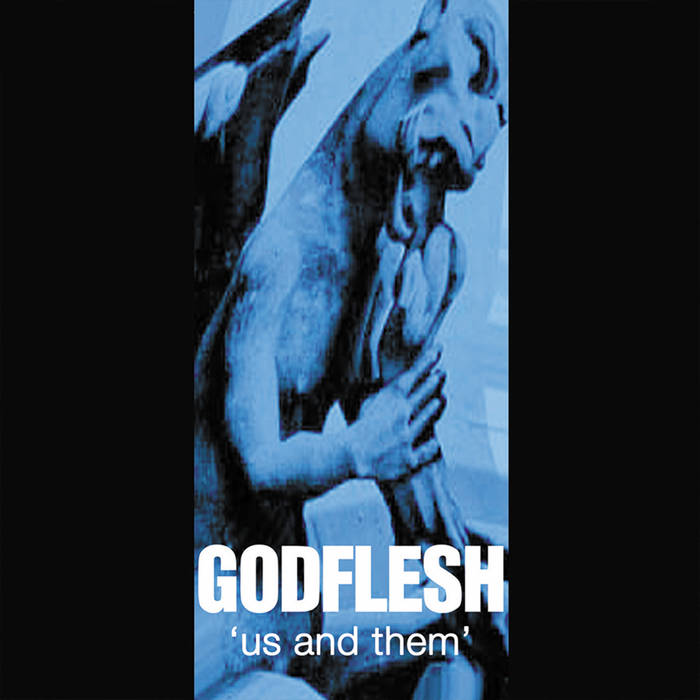
Godflesh – Us and Them

Genre: Industrial| Label: Earache Records
Location: Birmingham, England | Listen: Bandcamp

godflesh us and them

Godflesh is undoubtedly one of the most influential industrial metal acts of all time, with their lethal combination of monolithic riffs and drum machine beats. In 2015, I drove 1200 kilometres to see them live in support of their reunion album, “A World Lit Only by Fire.” While listening to various Godflesh releases on the trip, “Us and Them” was brought up by one of my friends, and it turns out I had yet to hear their fifth album. As per our discussion, I learned that Justin Broadrick wasn’t particularly fond of this record, and that it strayed deeper into various electronic music influences. This description had my attention, and after the trip, I took the time to check this record out.

Released in 1999, “Us and Them” is certainly an outlier in Godflesh’s discography, but it still retains the core elements of the band’s industrial sound. The opening track, “I, Me, Mine” introduces the album’s newfound approach with use of jungle beats and trip-hop soundscapes. The typical Godflesh groove can be found, but it also falls into some electronic dance feels, and could very well be played at a club. The title track displays this well, as it is a monolithic crusher of a song, but then breaks into a very late 90’s EDM-esque outro. Sections like this sound very much like a product of their time, and could very well serve as the perfect soundtrack for a cyberpunk film. This isn’t totally out of left field for Godflesh, as they were experimenting with sounds like this on the “Slavestate” single and its various remixes back in 1991.

“Us and Them” is a long album, clocking in at over an hour. It’s a bit of a commitment to listen to, but thankfully is diverse enough that it’s not doing the same thing over and over throughout. There are a couple songs that are reminiscent of the previous album, “Songs of Love and Hate.” The tracks in question, “Bittersweet” and “The Internal” feature more melodic singing and riffing, recapturing some of that post-metal vibe from that last record. The last track, “Live to Lose” also falls into this category, and was actually recorded in 1995, so that matches up with the timeline of when they were doing songs like that.

Adding to the diversity of this album, there are plenty of looped samples, usage of break beats, and infectious low end grooves. GC Green holds his bass parts down so well, whether it’s in more dance-able songs like “Endgames” or more traditional industrial paces like on “Witchunt.” “Us and Them” heads into some really dark and suffocating territory too, especially with the track “Defiled.” The contrast of trippy samples, jungle beats, menacing vocals, and the claustrophobic sounding bass create such a unique atmosphere for a song. Again, I can’t stop picturing a film like “The Matrix” when listening to tracks like this, further cementing itself as a product of 1999.

Godflesh aren’t for everyone, and “Us and Them” isn’t exactly their most revered album. It’s not a breakthrough album like their debut was, and it strays into territory that is pretty far removed from metal. In addition to Broadrick’s intial hatred of the record after its release, GC Green left the band, and then Godflesh fell apart after one more album. Broadrick has toned back his distaste of this album, boiling it down to disliking some “cringe-worthy moments,” which in my opinion are probably some of the samples chosen here and there. However, I can’t help but enjoy these songs, as they still have massive hooks, infectious grooves, and the pronounced influence of electronic music gives this album such a unique sound. Fans of Godflesh that haven’t given this album a lot of time ought to try it again, and any metal fan that has an interest in industrial/electronic music should try it out too.

80%

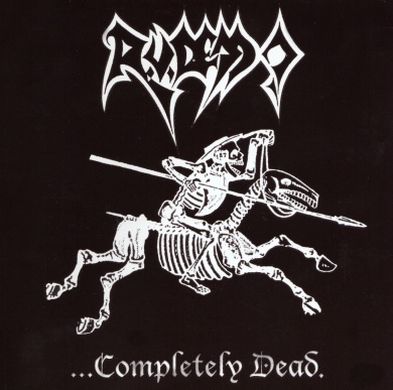
R. U. Dead? – …Completely Dead

Genre: Thrash Metal | Label: Majestic Union
Location: Ulm, Germany | Listen: N/A

r u dead

R. U. Dead? (here after referred to as RUD) were a cult thrash band from south Germany that were formed in 1989. Prior to RUD, guitarist Uli Hildenbrand was in Poison, another German thrash band that released a string of demos throughout the mid 80’s. If you aren’t familiar with Poison, “Into the Abyss” is certainly worth hearing, and provides a lot of context for what Hildenbrand was doing with RUD. The brand of thrash he was after was a lot more elaborate than that of Destruction, Kreator, or Sodom. Much like Poison, RUD never released a full length, and instead graced us with several demos and EPs. This compilation contains tracks from three EPs and three demos spanning their existence.

The first three tracks are from the 1996 EP, “A Thought Before the Kill,” which right away starts off with an eerie intro that includes an almost operatic vocal approach. Before long, it builds up into something that can be more recognized as thrash, with an increasing amount of velocity. The vocals are completely unhinged, ripping through the songs with a primal roar. There’s a pretty evil sense of melody throughout all of this, and it’s mixed with some off kilter, Voivod-ian like riffs.

The next four tracks can originally be found on the “Nothing Will Be Forgiven” EP from 1995. A little more raw than the previous tracks, there’s no lack of intensity in these songs either. Riffs have a lot of well thought out phrasing as they twist around patterns and variations. The tracks from this EP were of particular interest to me, as the track “When Your Heart Turns Black” was covered by Ares Kingdom in more recent years, and you can really see how RUD’s influence rubbed off on those midwesterners. The refinement of vision with more mature musicianship can really be seen between the Poison and RUD material, much like how Keller of Ares Kingdom pushed on after the demise of Order From Chaos. These four songs, and especially the aforementioned song, are the highlight of this recording for me.

As the tracklist progresses, we go farther back in time to RUD’s original incarnation, as they broke up in 1992, only to reform  in ’94 and do the previously discussed material. Here we get both tracks of their first 7″, as well as the lead tracks from their first two demos. A different vocalist is on this material, and I wouldn’t be surprised if Alex Blume of Ares Kingdom was heavily influenced by these vocals. These tracks sound even more primitive, but still have a sense of epicness to them, especially the 8+ minute, doom laden “The Tombs Have Not Been Sealed.” As the timeline would suggest, this era of the band sounds very much between the Poison material and the second era of RUD. In fact, “Lurking Fear,” one of the demo tracks, was originally a Poison song. This song is a certified thrasher and sounds even more crushing than ever.

Jumping ahead in time, the final track on this 68 minute compilation is from a rehearsal tape that was released in 1998. It is the last recording of RUD before they finally broke up. It sounds rawer than the early demo material, but the songwriting and musicianship is as mature as ever. I can only speculate as to why they broke up at this point, and it’s really too bad they never did a full studio recording.

This compilation is an excellent way to dig into one of Germany’s cult thrash metal acts. Yes, the name is silly, but don’t let that stop you from checking out R.U. Dead?. The first couple EPs on this compilation are worth hearing alone, and the older material thrashes hard. Poison gets a fair amount of praise despite not having a proper full length, where as RUD seems to fly under the radar for most. Rest assured, Hildenbrand’s unique style that he first developed with Poison keeps following that trajectory in RUD.

85%

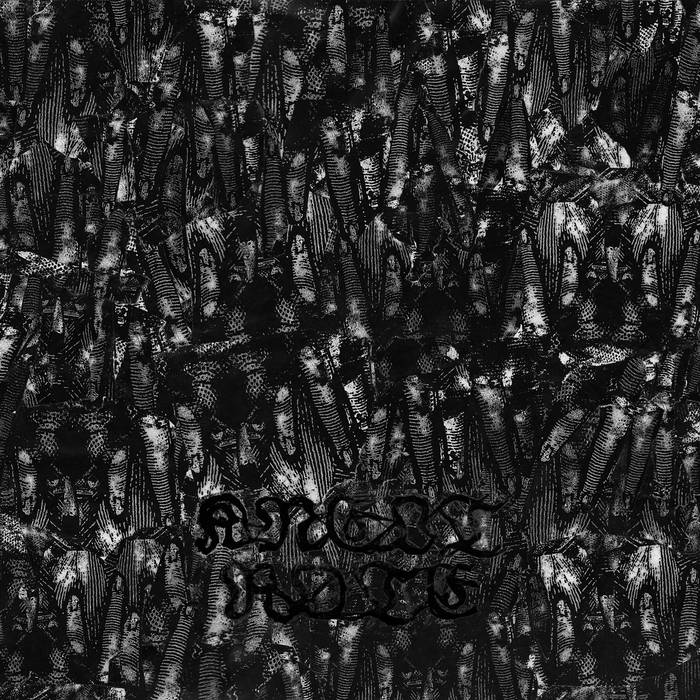
Knelt Rote – Trespass

Genre: Black/Death/Grindcore | Label: Nuclear War Now!
Location: Portland, OR | Listen: Bandcamp

knelt rote trespass

Back in 2012, the Portland, OR grind machine known as Knelt Rote unleashed their third album, “Trespass.” Prior to this, the band had a couple albums and a demo under their belt, but were constantly under stylistic change. The early material was a hybrid of grindcore and harsh noise, and they found themselves incorporating more black/death metal into their sound with the sophomore album. By the time “Trespass” came out, Knelt Rote’s sound had a lot more in common with war metal than previous releases. It is extremity pushed to the absolute limits, perfected with precise musicianship, and a clear understanding of creating unsettling atmospheres.

Upon hearing this album upon its release, I was instantly hooked by how unrelenting it was. It has the same barbaric feel of Revenge, but with more attention to detail in the production, not to mention more dynamic in both the riffs and general songwriting. The riffs certainly display a competent use of fretwork, allowing them to step out the monotonous primitive cliches that most war metal bands swear by. That being said, these songs still eschew things like melody and favour chromatic chaos.

The pacing of this record is nice. Despite the fact that it’s constantly pushing the extreme, it still has an inherent ebb and flow. Blastbeats make up the majority of the drums here, but several kinds are utilized which helps distinguish things, and create a mesmerizing barrage of speed. There’s also the expected goat blasts and more simplified beats that hammer away, even down to the downright ultra slow crawl of the record’s longest song, “Identical.”

Plenty of nuances are scattered throughout the record which help keep it interesting. Pick slides, chaotic leads, rumbling bass sections, more things that help add variety and avoid making things monotonous. Furthermore, all four members of the band contribute vocals, giving a much needed dynamic to the vocals. There are plenty of parts where voices double each other, mixing together high screams and low growls. The harsh noise background of the band comes into play with some of the vocal effects, such as with end of “Hunger” where the band drops away and the vocal tracks are distorted with noise.

The harsh noise influence makes itself most apparent with the track “Interlude,” as it features some crackling noise-scapes with ominous guitars over top, giving a much needed break after the aforementioned longest track, and before they close things out with the ever so violent “Catalepsy.” This song calls back to the ominous guitar lines of “Interlude,” making this album seem much more cohesive as a whole rather than individual songs. Indeed, some of these tracks might be hard to distinguish from one another, but with all the aforementioned dynamics and nuances, it’s by no means monotonous.

“Trespass” has been in constant rotation for me since it came out. There’s not a lot of stuff in the last 10 years of this style that stands out like this does. It satisfies the need for extremity in my listening habits, but it also offers enough dynamics within its barbarity to keep me coming back. The collective resume between all the members of this band is pretty ridiculous and varied, and it’s impressive how they were able to take elements from their musical backgrounds and fuse them into something that transcends extreme music. This is the kind of extremity that can appeal to a few different niches of fans, and anyone into black/death metal, grindcore, and/or harsh noise needs this record in their collection. Much like the artwork presented in the album (which is brilliant, by the way), it looks monotonous and mechanical, but is clearly detailed when put into focus.

90%

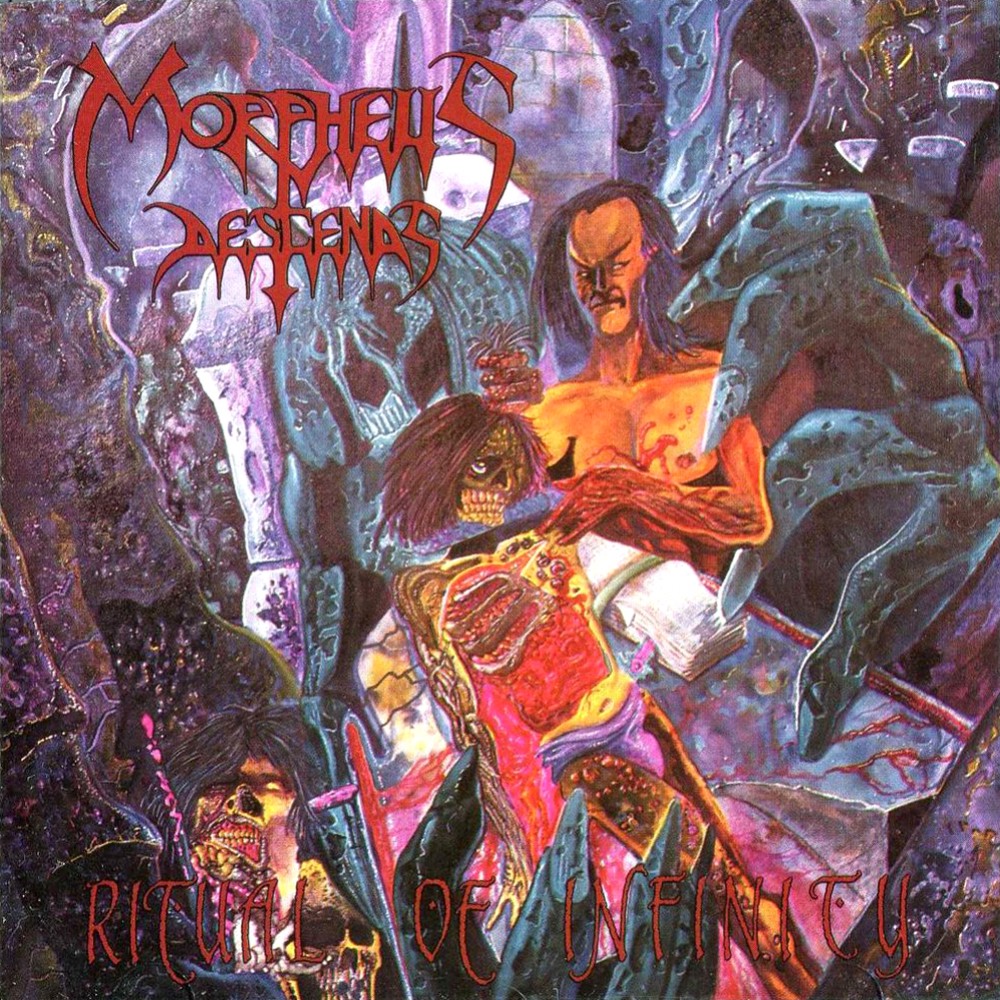
Morpheus Descends – Ritual of Infinity

Genre: Death Metal | Label: JL America
Location: Middletown, NY | Listen: YouTube

Morpheus Descends Ritual

New York has always been a hot bed for groundbreaking music, and death metal is no exception. During the late 80’s and early 90’s, many death metal bands were forming in the NY/NJ/PA metro area, and finding ways to stand out from the emerging death metal scenes around the world. Many today will think of bands like Suffocation, Incantation, and Immolation when it comes to NYDM, but Morpheus Descends should also be on people’s radar when it comes to discussing the development of that sound.

Formed under the name Morpheus in 1990, the band put out a couple demos and an EP before recording and releasing “Ritual of Infinity” in 1992. At this point, Suffocation had already put out “Effigy of the Forgotten” a year earlier, which featured a barrage of technical riffing, blasting drums, thrashy hooks, and crushing breakdowns. These elements, with perhaps the exception of the thrash influences, really came to define what NYDM was about. Morpheus Descends certainly embodied similar characteristics, but not quite as thrashy.

“Ritual of Infinity” is an odd debut album – it was recorded in 3 different sessions throughout 1992, so there’s a bit of fluctuation between songs with the production. Thankfully, because the band recorded at the same studio each time, the difference isn’t too jarring. In fact, the first session of this recording was released as a demo under the Morephus moniker before the rest of the record was recorded. The guitars have a bit of a Morrisound/Scott Burns copycat tone, and the drums have the kick drum really up front with lots of clicky attack. The only thing I really notice between the three recording sessions is that kick drum is louder on some tracks. A lot of NYDM would try sounding like this, with buzzier sounding guitars and similarly clicky drum sounds. This is a little dryer sounding than their peers in Suffocation, but it lends a bit of a cult vibe to the record.

As for the music itself, Morpheus Descends crafted a brutal, evil sounding album that still manages to have hooks you can sink into. “Corpse Under Glass” is likely the catchiest song on this record, with that evil sounding intro being quite unforgettable. There’s a good amount of chunky breakdowns throughout the record that have a lot in common with Suffocation, and many NYDM bands based their sound off this, such as Pyrexia and Internal Bleeding. Morpheus Descends have a better sense of groove and variety in these kind of breakdowns, and they don’t sound as mechanical or “slam” like later bands would try and do. There’s a fair amount of variety in the riffing too, with some riffs sounding like a New York version of Bolt Thrower, as well as some tremolo picking over blastbeats or double kick sections.

Everything that would come to define death metal in the early 90’s can be found here. This is clearly a step in death metal’s evolution, and unlike many contemporaries like Morbid Angel, Revenant, Pestilence, etc, there’s no immediately apparent thrash influence. The low, guttural vocals also take it to that next realm beyond thrash metal. The riffs definitely have a little bit of finger twisting going on, but it’s not quite as technical as Suffocation, which makes them a little easier to get stuck in your head.

A lot of brutal death metal owes its sound to these seminal NYDM bands, and Morpheus Descends were without question innovators of their regional sound. It’s a shame they couldn’t keep a stable line up for the rest of the 90’s, as never released another full length again. They did do some EPs and demos after, but with member changes, they started to experiment with their sound, utilizing more dissonance and even adding some black metal elements into the mix. Thankfully, this material is far from forgotten, as it’s been reissued a few times. Not only that, but there’s a discography box set on Dark Descent Records with some remixing/remastering for some of it. This is absolutely a classic death metal record, and no metal collection is complete without this regional sound defining album.

89%

Bigorexia – Extemporaneous Expirations of Existence

10 song EP from Edmonton goregrinders Bigorexia. I had done work for this band before, but now they have a drummer that lives in town, so this time around I was able to record everything, as well as mixing and mastering. This came out great, features some Sopranos samples, and just grinds hard.

Krypts – Remnants of Expansion

Genre: Death/Doom Metal | Label: Dark Descent Records
Location: Helsinki, Finland | Listen: Bandcamp

krypts remnants

Over the last four years, Krypts’ sophomore full length has cemented itself in my listening rotation. I can’t get enough of its gloomy death/doom atmosphere that is especially appropriate for the long, dark months of winter. This is the second full length from this Finnish outfit, whom I’ve been following since the release of their demo. The first album didn’t really do much for me, as I recall it being a lot more straight forward. Thus, “Remnants of Expansion” really surprised me when I first heard it.

The album opens up with its lengthiest track, “Arrow of Entropy,” which clocks in at 11 minutes. This song takes its time and has a lot of breathing room, but it never feels like it’s meandering around. There’s a build up to some more mid paced, double bass dominated death metal parts. Krypts make good use of dissonant chords that help emphasize the ethereal slow sections between. They layer in some nice lead melodies which further add some more desolate sounds into the mix.

Dark Descent Records has put out some really phenomenal death/doom records over the last decade, including the sole albums by Anhedonist and Spectral Voice. This record definitely has a lot in common with both, yet it maintains a uniquely Finnish sound. The second track, “The Withering Titan” starts off with some ritualistic sounding moans, and similar eerie vocals are used by their labelmates. This song builds up to some blasting sections, but it still has this very ominous tone that keeps it all together as one coherent song. They don’t quite go as full diSEMBOWELMENT like some other bands, but the instrumental title track has traces of it.

Finland has a rich history of death metal that has its own unique characteristics, and Krypts are at the forefront of the modern Finnish scene as far as I’m concerned. Bands like Rippikoulu pushed that heavy Finnish death metal sound into the doomiest of territories back in the early 90’s, and I have no doubt that Krypts take influence from them. Unlike a lot of those classic Finnish albums, the production here sounds more refined, but it retains the proper atmosphere. The drums sounds massive in both the simpler parts, and also cut through well during the busier blast sections, not to mention they have a nice amount of reverb. Likewise, the guitars, bass, and vocals all sound just as huge, utilizing reverb and layers. The last track, “Transfixed,” contains everything from more ominous vocal chants, to more haunting leads, and you can really appreciate how well all these parts and layers breath over each other.

Surprisingly, this album is only 34 minutes long. It says what is has to in a short amount of time, especially for a death/doom record. It offers a lot of variety without any wacky juxtaposition. Instead, Krypts masterfully utilize the momentum of each part to flow to the next, no matter if they’re breaking away to slower territory, or if they’re building towards some pure death metal moments. The artwork for this record perfectly represents what their music sounds like, capturing that dismal feeling from the cold northern skies. The album they released after this is great too, but I would recommend “Remnants of Expansion” over it if you’re new to the band.

85%